Blog/Article

April 22nd, 2026

Sales Follow-Up Statistics 2026: Why Speed and Follow-Up Time Are Everything

78% of deals go to the vendor who responds first — and the average sales team takes 47 hours to follow up after initial contact. Most prospects expect a response within an hour, but fewer than 1 in 4 sales reps follow up more than twice, leaving significant revenue on the table. The data consistently shows that speed and persistence in follow-up are the strongest predictors of deal conversion.

Sales Follow-Up Statistics 2026: Why Speed and Follow-Up Time Are Everything-image

TL;DR

Ask AI for Summary

Introduction

Sales Follow-Up Statistics 2026: Why Speed and Follow-Up Time Are Everything

If you want to understand why deals slip, start with a single number: 47 hours. That's how long the average sales team waits before following up after first contact. Meanwhile, 78% of deals go to whoever responds first. The gap between those two facts is where revenue disappears.

This article breaks down the most important sales follow-up statistics heading into 2026, organized around what actually drives conversion: timing, persistence, channel selection, and the cost of admin delays.


The short answer: 78% of deals go to the vendor who responds first - and the average sales team takes 47 hours to follow up after initial contact. Most prospects expect a response within an hour, but fewer than 1 in 4 sales reps follow up more than twice, leaving significant revenue on the table. The data consistently shows that speed and persistence in follow-up are the strongest predictors of deal conversion.


Why Does 78% of Revenue Go to the First Rep Who Shows Up?

The 78% figure isn't a coincidence - it reflects buyer psychology. When a prospect reaches out, their intent is at its peak. Every hour that passes, competing options fill their attention, skepticism grows, and the emotional momentum behind the initial inquiry fades.

According to research by Lead Response Management (2024), responding to a lead within the first 5 minutes makes you 9x more likely to convert that lead than responding after 30 minutes. After 24 hours, the conversion probability drops by more than 60%.

This isn't just about speed for its own sake. It signals professionalism, organizational readiness, and genuine interest in the prospect's problem.

The 47-Hour Problem

The average follow-up time across B2B sales teams sits at 47 hours after initial contact - a figure consistently reported across sales benchmarking studies from HubSpot, InsideSales.com, and Revenue.io (2024). That's roughly two full business days.

In a competitive deal, that window might be all your competitor needs. If they're running automated acknowledgment with a personal follow-up scheduled within 30 minutes, they've already set the tone for the entire relationship.


What Do Sales Follow-Up Statistics Say About How Many Times You Should Follow Up?

Persistence data is some of the most counterintuitive in sales. Most reps quit far too early.

According to HubSpot's Sales Report (2024):

  • 44% of sales reps give up after one follow-up
  • 22% stop after two attempts
  • Only 8% of reps make more than 5 follow-up attempts

Yet the same research shows that 80% of deals require at least 5 touchpoints to close. The math here is brutal: the reps who stop at two are abandoning the vast majority of winnable deals.

Follow-Up by Channel: What the Data Shows

Channel selection matters as much as timing. Here's what current benchmarks show for average response rates:

Channel Average Response Rate Best Send Time Notes
Email (personalized) 8–12% Tuesday–Thursday, 8–10am Subject line = 47% of open decisions
LinkedIn InMail 10–25% Tuesday–Wednesday 3x higher than cold email
Phone (voicemail) 4–6% callback rate 4–5pm local time 80% of calls go to voicemail
SMS 20–35% open within 3 min Business hours Used sparingly, highest immediacy
Multi-channel sequence 15–22% engagement N/A Mix of email + phone + social

According to Sales Development Technology Report by Revenue.io (2024), multi-channel sequences outperform single-channel outreach by 37%. The highest-performing reps aren't choosing between email and phone - they're sequencing them intentionally.


Sales Email Statistics: Open, Reply, and Meeting Book Data for 2026

Email remains the dominant sales follow-up channel. Here's the current benchmark picture:

Open rates:

  • Average cold sales email open rate: 21–24% (Campaign Monitor, 2024)
  • With personalized subject lines: 26–35%
  • With the prospect's company name in subject: +22% open rate

Reply rates:

  • Average reply rate for cold outreach: 2–5%
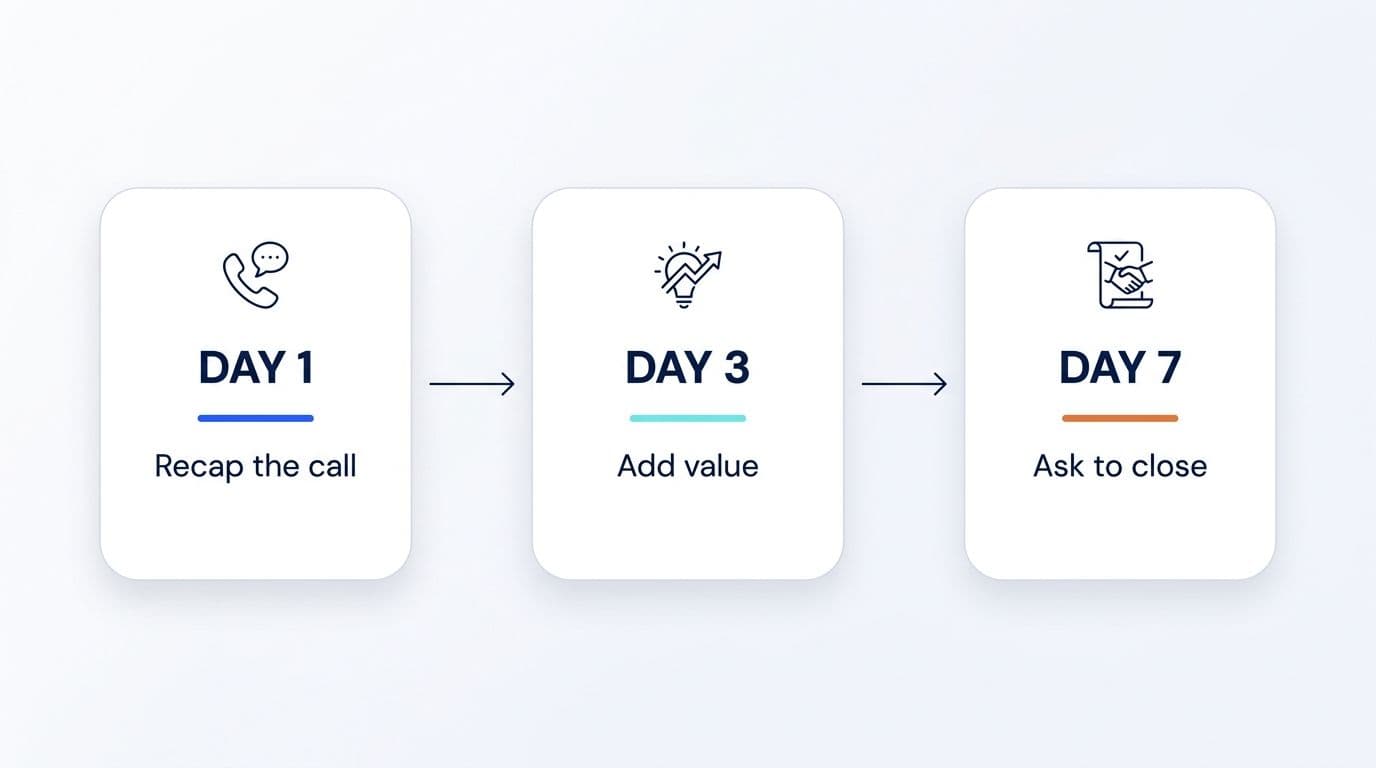
  • Follow-up email (sequence step 2+): 8–10% - higher than the first email
  • Follow-up emails in a 4-step sequence generate 3x more replies than stopping at one send (HubSpot, 2024)

Meeting book rates:

  • Average across B2B: 0.5–2% of contacts booked per sequence
  • Top-performing SDR teams: 4–6% book rate
  • The difference is almost entirely in personalization quality and follow-up persistence

The Subject Line Effect

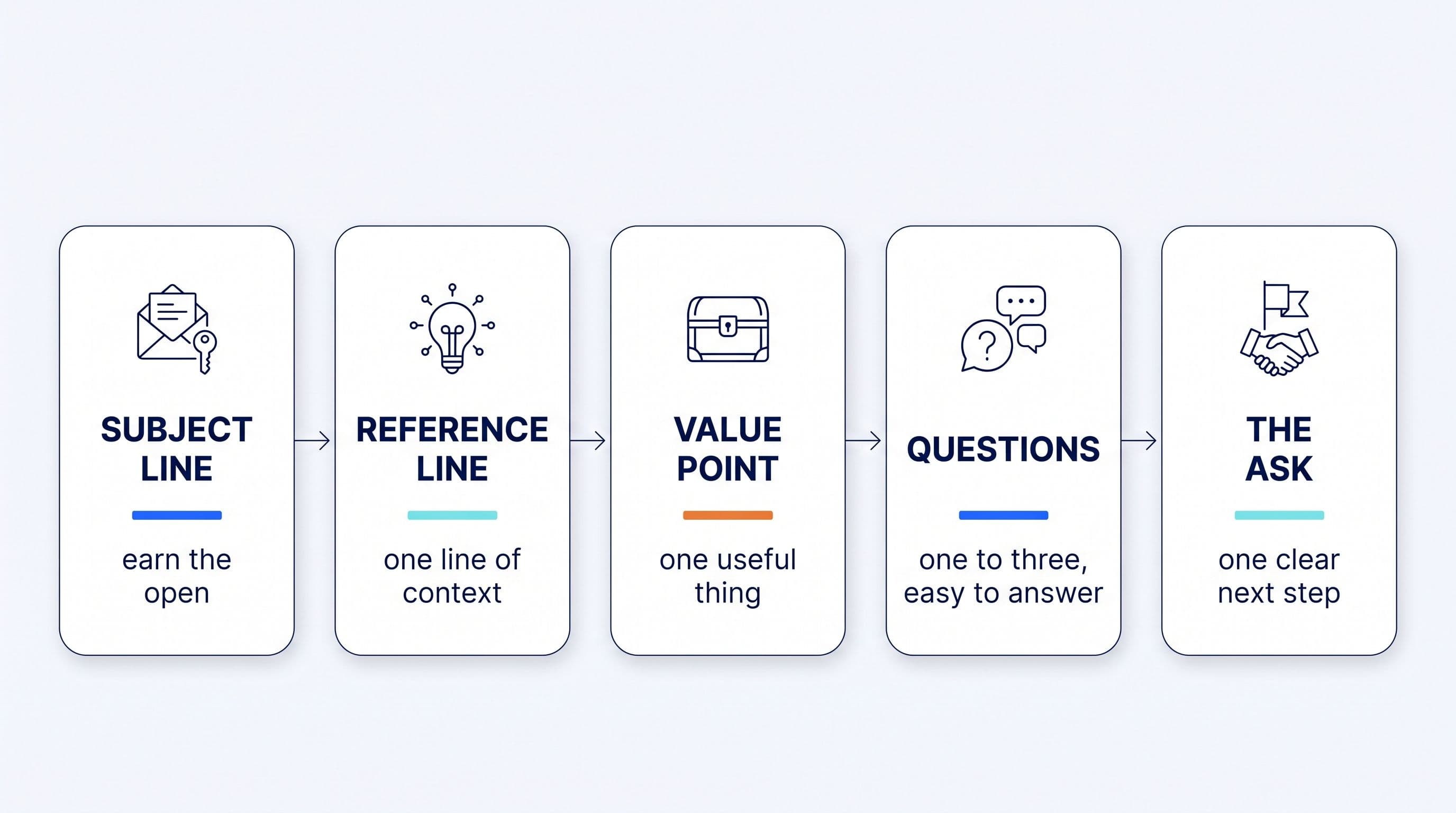
According to research by HubSpot (2024), 47% of email recipients decide whether to open an email based solely on the subject line. The top-performing subject line formats for sales follow-up:

  1. Question format: "Quick question about [specific pain]" - 34% open rate
  2. Reference format: "Re: our call on Tuesday" - 41% open rate
  3. Value-forward: "[Company] + [Your Company]: one idea" - 29% open rate
  4. Short and direct: Under 50 characters consistently outperforms long subjects

How Does Average Response Time in Sales Compare by Industry?

Not all industries move at the same pace - and knowing your benchmarks matters when you're setting team SLAs.

Industry Average Response Time Top 10% Response Time
SaaS / Technology 2.1 hours Under 15 minutes
Financial Services 3.4 hours Under 30 minutes
Professional Services 5.2 hours Under 1 hour
Manufacturing 9.8 hours Under 2 hours
Real Estate 15.2 hours Under 30 minutes
Healthcare 7.6 hours Under 1 hour

Source: Lead Response Management Study, InsideSales.com, 2024 benchmarks

The top 10% in every category are responding dramatically faster than the average - often within 15–30 minutes. That's not a staffing issue; it's a process and tooling issue.

What Response Time Are B2B buyers Actually Expected?

According to a 2024 survey by SuperOffice, 88% of B2B buyers expect a response to their inquiry within one business hour. Only 36% of companies meet that expectation.

That 52-percentage-point gap is a direct opportunity. If your team can consistently hit the 60-minute threshold, you're already outperforming more than half of your market.


The Admin Problem: Why Sales Follow-Up Takes So Long

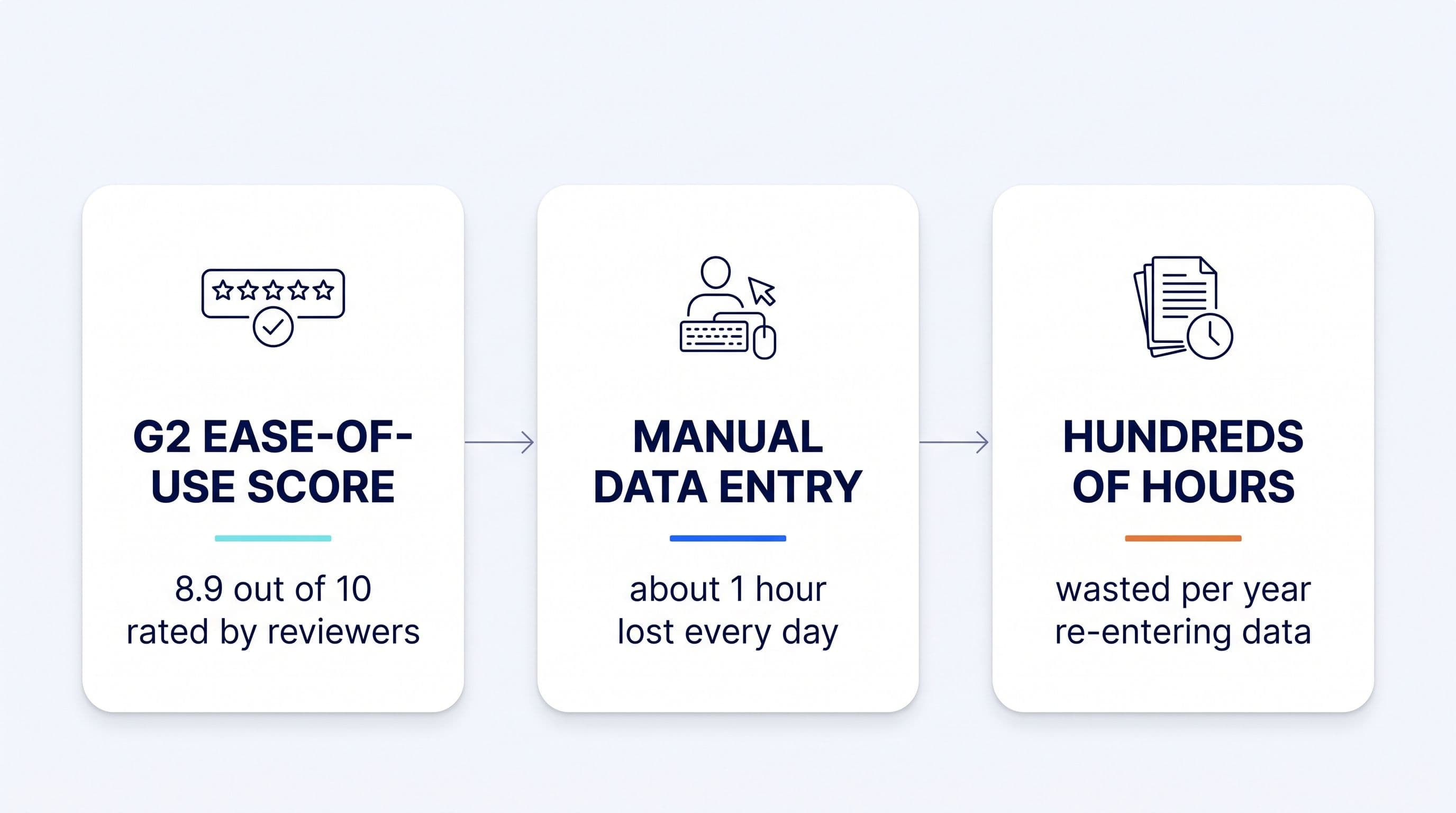
Here's a statistic that doesn't get enough attention: Sales reps spend only 28% of their week actually selling (HubSpot State of Sales, 2024). The rest goes to CRM data entry, scheduling, writing follow-up emails, updating pipeline stages, and internal reporting.

For a typical full-cycle AE working a 45-hour week, that's roughly 32 hours per week on non-selling work. When follow-up competes with data entry, follow-up loses - not because reps don't care, but because CRM hygiene requirements crowd out the time.

The Cost of a 47-Hour Follow-Up Window

Let's put this in deal terms:

  • If your team works 200 active opportunities at any time, and each loses a 15% conversion lift by responding slowly, that's 30 deals lost per cycle.
  • At an ACV of $18,000, that's $540,000 in preventable churn per sales cycle from follow-up timing alone.
  • At enterprise ACV levels, the number scales dramatically.

How to Get Follow-Up Time Under 6 Minutes

The 47-hour average isn't a law of physics. It's a process failure. Here's what the best teams have changed:

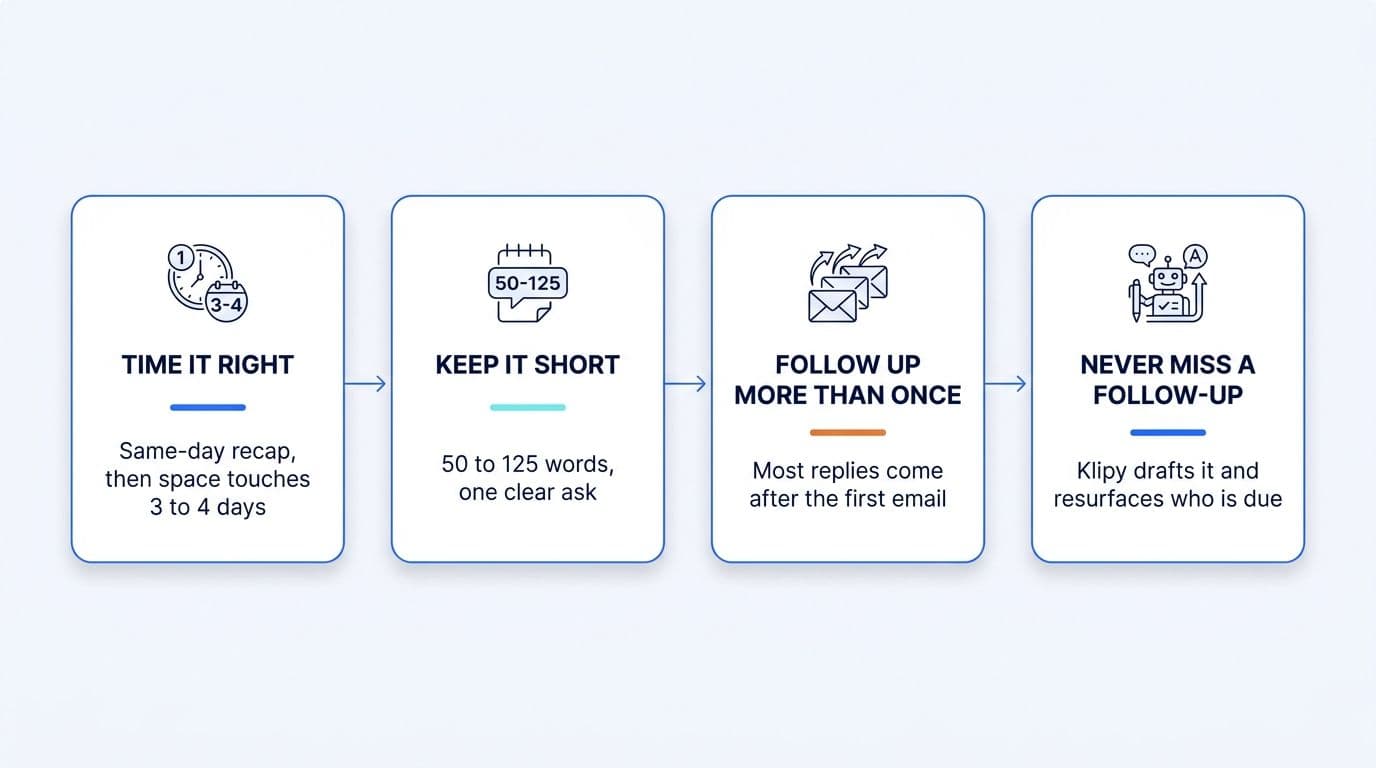
1. Auto-generate follow-up drafts after every meeting Instead of a rep sitting down to write a recap from scratch, AI systems can produce a draft follow-up within seconds of a call ending - pulling key points, next steps, and objections directly from the transcript. The rep reviews and sends in under 5 minutes.

2. CRM sync happens automatically When CRM entries write themselves - contact details, deal stage updates, action items - reps aren't choosing between follow-up and data entry. Both happen.

3. Pipeline alerts trigger the right action at the right time Instead of reps manually tracking deal age and last-contact dates, proactive systems surface deals that have gone quiet and prompt the next action before the window closes.

4. Follow-up sequences launch from meeting summaries If the meeting summary triggers a pre-built sequence, the first follow-up goes out within minutes of the meeting ending - not 47 hours later.

[How does this work with existing CRM workflows?]

Klipy's AI follow-up drafts connect directly to this workflow. After a meeting ends, the system generates a personalized follow-up email in under 60 seconds, syncs key points to your CRM, and queues next actions in the pipeline - cutting the average rep's post-meeting work from 47+ minutes to under 6 minutes. Teams using this model report response times dropping from multi-day windows to under 30 minutes for post-meeting follow-ups.


A Note on AI-Generated Follow-Up Quality

One legitimate concern with AI-generated follow-up emails is whether they feel generic. The data on this is clear: personalization is the single largest variable in reply rates (HubSpot, 2024).

The answer isn't to avoid AI - it's to make sure the AI pulls from actual meeting content. A follow-up that references a specific pain point mentioned at 14:32 in a 45-minute call feels personal because it is personal. It just didn't take 30 minutes to write.

The best implementations treat AI as a first-draft engine, not an auto-send tool. The rep's voice, judgment, and edits stay in the loop. The speed gains come from eliminating blank-page time, not from removing the human.


Key Sales Follow-Up Statistics Summary

Data Point Figure Source
% of deals to fastest responder 78% Lead Response Management, 2024
Average follow-up time after contact 47 hours InsideSales / HubSpot, 2024
% of deals requiring 5+ touchpoints 80% HubSpot Sales Report, 2024
% of reps who quit after 1 follow-up 44% HubSpot Sales Report, 2024
B2B buyers expecting <1hr response 88% SuperOffice Survey, 2024
Companies meeting 1hr expectation 36% SuperOffice Survey, 2024
Time reps spend actually selling 28% HubSpot State of Sales, 2024
Multi-channel outperformance vs single +37% Revenue.io, 2024
Reply rate lift on follow-up vs cold ~3x HubSpot, 2024

These numbers all point in the same direction: the follow-up window is short, most teams miss it, and the gap between average and top performance is almost entirely a process question - not a headcount question.

Jung Kim

About the author

Jung Kim

Founder & CEO of Klipy

Jung-Hong Kim is the CEO and Co-Founder of Klipy, an AI-powered sales operating system. With over 15 years of experience in the B2B technology sector as a machine learning researcher and enterprise architect, he is passionate about leveraging AI to enhance professional productivity and relationship management.

Connect on Linkedin

Frequently Asked Questions

78% of deals go to the vendor who responds first, according to sales follow-up research from Lead Response Management. This means response time is one of the single highest-leverage variables in your sales process. Teams that respond within 5 minutes are 9x more likely to convert a lead than those who wait 30 minutes or more.

Start closing the loop.

Free to start. No credit card. Connects to your email and calendar in two minutes. Your first follow-up drafts itself today.